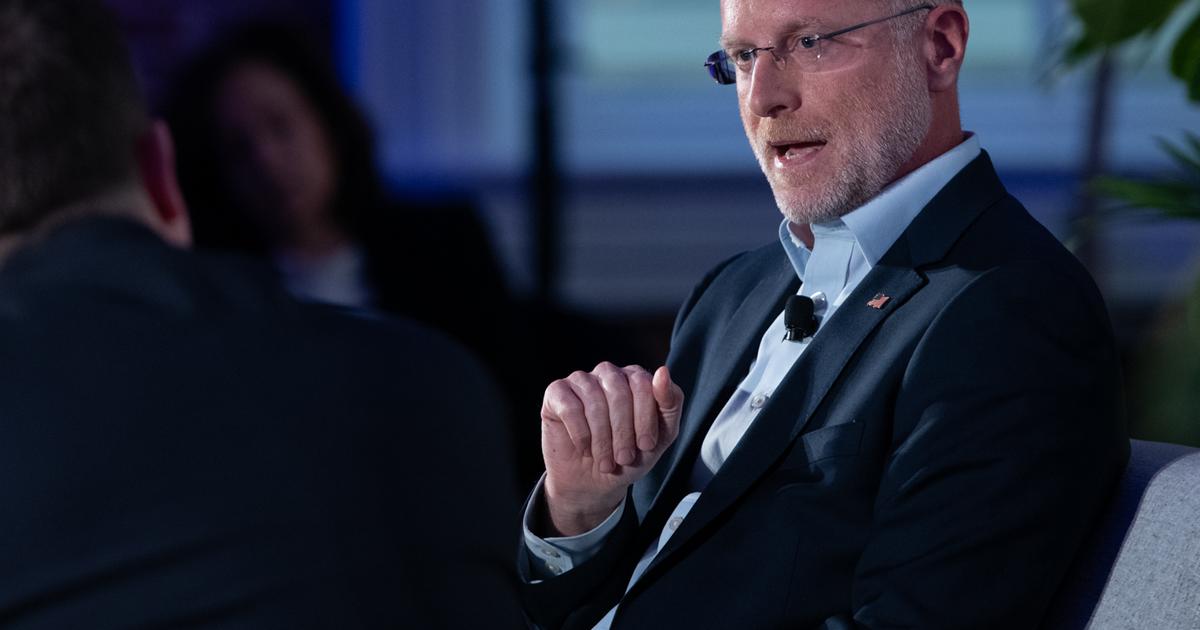
When I interviewed the chairman of the Federal Communications Commission, Brendan Carr, at the Semafor Media Summit in February, I tried to find something I was pretty sure we’d agree on: the longstanding American view that the biggest threat to free expression in the US is the government.
After all, Carr himself had written just a few years earlier that “a newsroom’s decision about what stories to cover and how to frame them should be beyond the reach of any government official.”
Carr didn’t bite: “The greatest threat that we have seen over the last several years really has come from large social media companies,” he told me.
With the twitch of a regulatory muscle on Wednesday, Carr forced America’s strongest legacy media company, Disney, to pull one of its biggest stars off the air. His leverage was indirect. Once-great broadcast networks have long been selling off their stations to private equity-backed operators with antiseptic names like Nexstar and Tegna — both of which operate under spectrum licenses Carr oversees. Now Nexstar needs the Trump administration’s approval to buy Tegna. Disney, in turn, relies on those affiliate networks for revenue. At various points along that decaying value chain, Carr has a lot of power.
The blunt government response to a comedian’s remarks discomfited some of the administration’s fellow travelers in the media, many of whom despise Jimmy Kimmel and hated his comments about Charlie Kirk’s alleged killer. “What Carr described would reimagine the FCC as a press regulator in a full-on truth-arbiter role, in the spirit of Britain’s hated OfCom,” wrote Matt Taibbi. “That feels like a big jump from where the Administration was in February, when J.D. Vance lambasted Europeans in Munich for losing sight of basic tenets of democracy, including the “freedom… to make mistakes.”
But to understand what the Trump administration is thinking, it’s important to understand that Carr wasn’t trying to dodge my question. He and his peers obviously enjoy using government power to crush their enemies. But their careers and their views were also shaped by a new set of grievances in this new media age.
The Trump administration, from the president down to the middle levels of obscure Cabinet departments, is populated by people whose defining experiences in public life involved being silenced by social platforms.
This predates the social media wars of the late 2010s: One Trump appointee told me that a radicalizing experience was being booted out of the Gawker comments section, way back in the day. But as progressive movements swept through social media, others were tossed off Twitter and Facebook for stepping over a variety of lines, from allegations of harassment to claims of election misinformation. Pandemic era public health rules and fevered enforcement cost others their accounts.
And so when this White House thinks about restrictions on speech, it thinks first about social media. And if the First Amendment doesn’t exactly apply there, and if Twitter’s Trust and Safety team wasn’t exactly a federal agency — well, those are details swept away by a political approach that uses power when it has it.
“The White House essentially employs every single employable ideologically-aligned anon I’ve interacted with on here for the last five years,” marveled a fellow “anon” on X, roon, in July. “Even after all you’ve heard about it it is still underreported how online they all are.”